
Authentic Caprese Salad: The Real Capri Recipe
Insalata caprese ("Capri salad" in Italian) was born in the 1920s at Hotel Quisisana in Capri, to celebrate the colors of the Italian flag: white, red, green. It became one of the most copied dishes in the world — and one of the most poorly made. The real recipe contains no balsamic vinegar, no arugula, no pesto, no industrial mozzarella. Just three ingredients of absolute quality, lifted by an extra virgin olive oil.
The 3 (real) ingredients of Caprese
Serves 2 as an appetizer:
- 1 ball of mozzarella di bufala campana DOP (250 g), never fior di latte or industrial cow's milk mozzarella
- 2 large ripe tomatoes (San Marzano, beefsteak or Marmande) — about 300 g
- 8-10 fresh basil leaves (Genovese DOP ideally)
- 4 tablespoons extra virgin olive oil (40 ml), medium-fruity, southern Italy or Provence
- Flaky sea salt, freshly ground black pepper (optional — Neapolitan purists skip it)
That's it. No dried oregano, no garlic, no lemon. Caprese is an ingredient-quality test, like bruschetta or aglio e olio.
The 5-step method
1. Take the mozzarella out of the fridge 30 minutes ahead
This is secret #1. Cold mozzarella stays rubbery and expresses no aroma. At room temperature (~20°C), it releases its whey, turns silky, and reveals its lactic notes. Keep it in its water until the last minute.
2. Choose and prep the tomatoes
Tomatoes at room temperature, never from the fridge (which destroys aroma and turns them mealy). Slice 1 cm thick, with a sharp knife so you don't crush the flesh. Salt lightly and rest 5 minutes on paper towels to release excess water.
3. Slice the mozzarella
Slices 1 cm thick too, matching the tomato proportions. Drain a few minutes on a clean cloth.
4. Plate in alternation
On a flat plate, alternate a slice of tomato, a slice of mozzarella, a basil leaf. Arrange in a fan or circle, never in a pile. Basil goes on whole, never chopped — to avoid oxidation and keep the visual effect.
5. Olive oil: the key moment
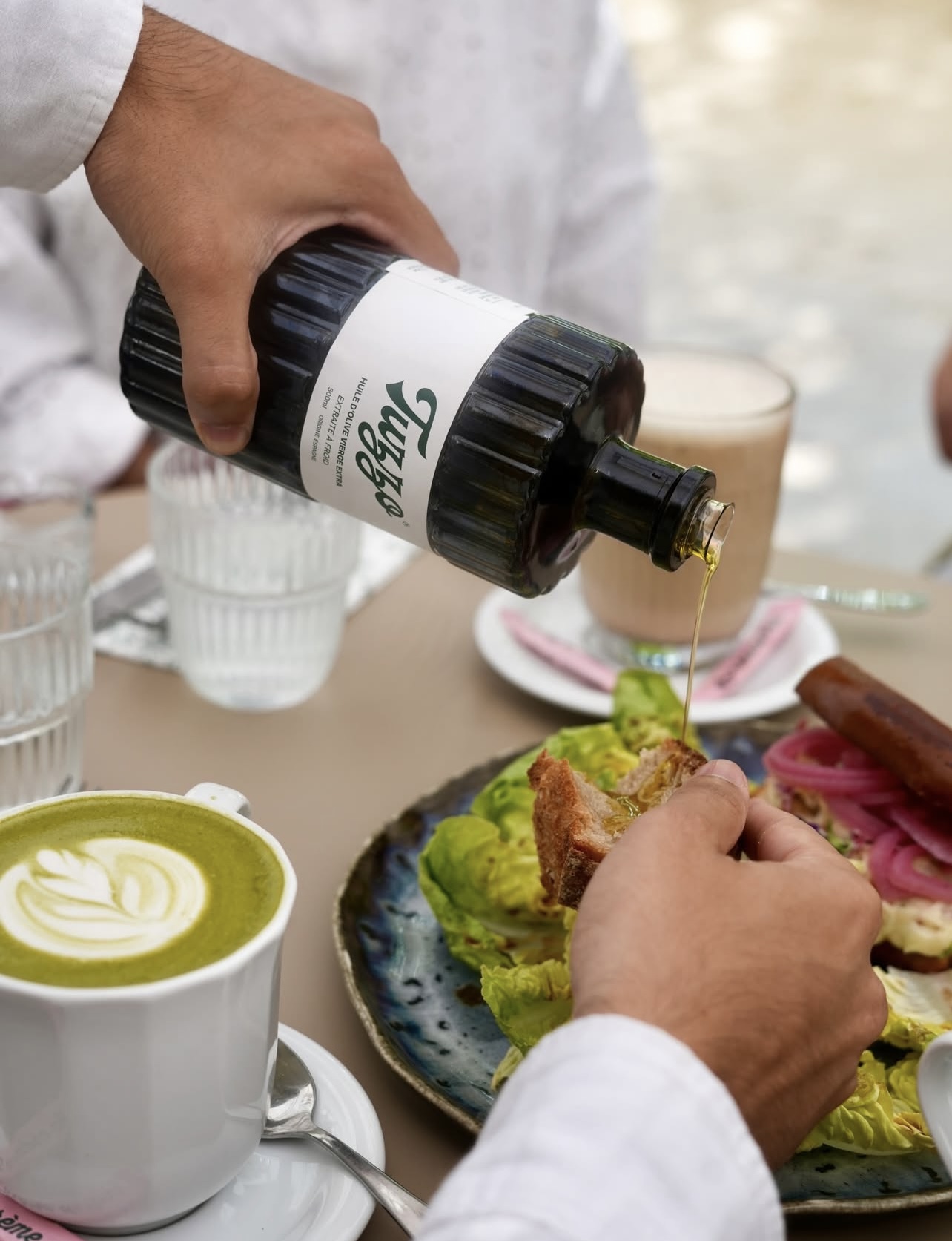
Drizzle generously with extra virgin olive oil — count 2 tbsp per person minimum. The oil should form small golden beads on the mozzarella and slide over the tomatoes. A pinch of flaky salt on the mozzarella (never on the already-salted tomato). Serve immediately.
The 6 mistakes that ruin a Caprese
- Balsamic vinegar or balsamic glaze → Neapolitan heresy; balsamic masks the mozzarella and acidifies the whole
- Industrial cow's milk mozzarella → rubbery texture, no lactic notes; you need bufala campana DOP
- Cold or out-of-season tomatoes → watery taste, no aroma; Caprese = summer dish, June to September
- Chopped or shredded basil → immediate oxidation, black spots
- Refined or "mild" olive oil → Caprese rests entirely on the oil; see virgin vs refined
- Making it ahead → mozzarella weeps, tomatoes weep, the plate is swimming in 20 minutes