
Why your homemade hummus is never as creamy as the restaurant's
The secret to authentic Lebanese hummus is not the blender — it is three details 90 % of Western recipes miss: long-simmered chickpeas with baking soda, skin removal, and the right tahini/lemon/olive oil ratio. Here is the version passed down by Beirut's mezzeyé.
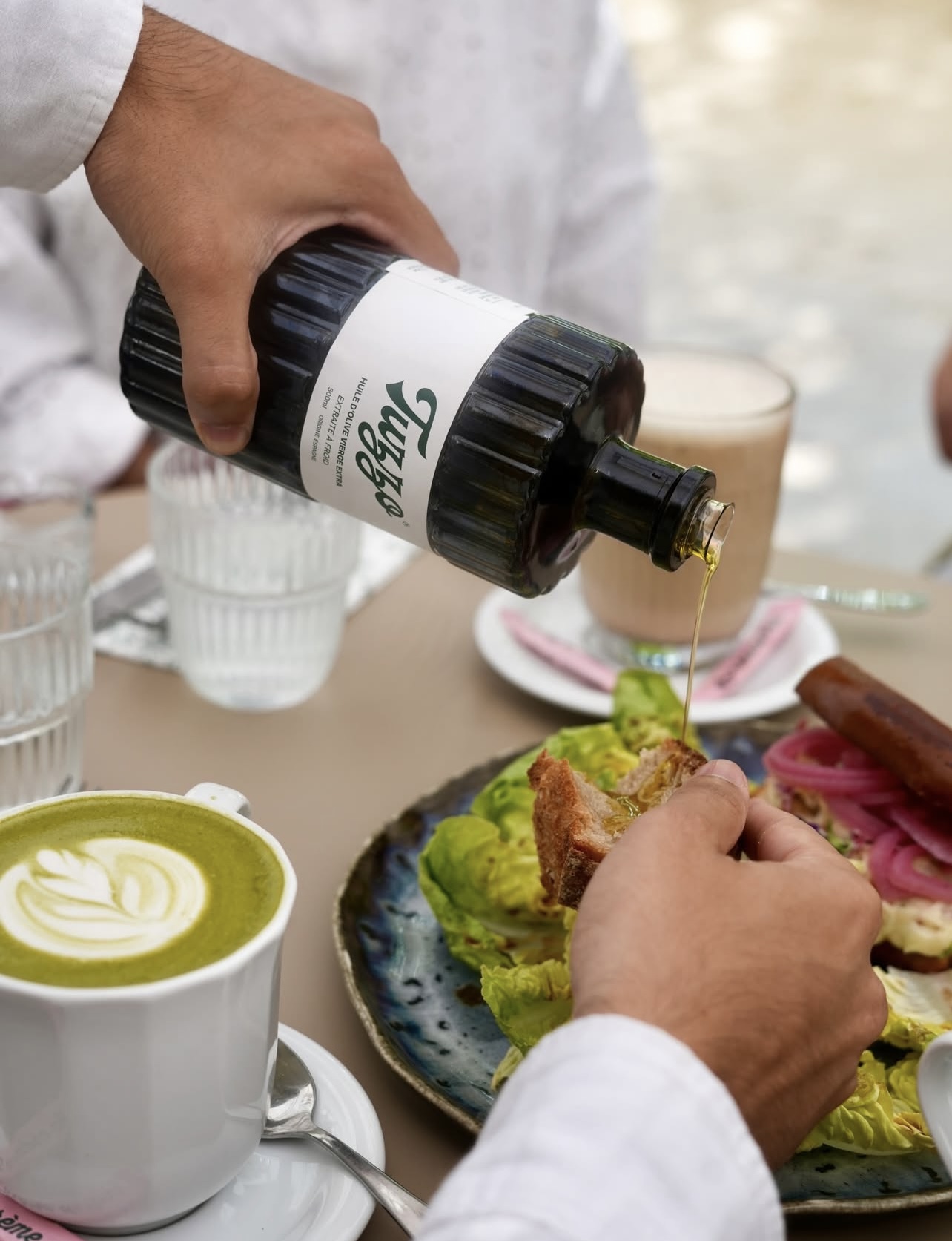
As with every Mediterranean recipe, the quality of olive oil is decisive — it goes in the paste and drizzles generously before serving. To understand why, see our article on virgin vs refined.
Ingredients for 6 servings
- 250 g (1¼ cup) dried chickpeas (or two 14 oz cans, drained)
- 1 tsp baking soda
- 120 g (½ cup) tahini (ideally Lebanese or Palestinian)
- Juice of 2 lemons (≈ 80 ml / ⅓ cup)
- 2 garlic cloves, germ removed
- 1 tsp fine salt
- 80 ml (⅓ cup) ice water
- 4 tbsp extra virgin olive oil (+ more to serve)
To serve: sweet paprika, chopped flat parsley, a few whole chickpeas, ground cumin, and a final drizzle of olive oil.
Step-by-step method (1 h 30, soaking apart)
1. Soak and cook the chickpeas
Soak chickpeas overnight in plenty of cold water with ½ tsp baking soda. The next day, drain and simmer in fresh water with ½ tsp baking soda for 60 to 75 minutes. They should crush between two fingers with no resistance.
Tip: regularly skim the skins that rise to the surface. They are what makes hummus grainy.
2. Remove the skins
Drain (save the cooking water). Rub the warm chickpeas in a tea towel — most skins come off. Five minutes of effort, radical texture upgrade.
3. Prep the lemon-garlic base
In a blender, blitz lemon juice with garlic and salt for 1 minute. Strain through a fine sieve. This step tames raw garlic and avoids unpleasant breath.
4. Emulsify the tahini
Add tahini to the lemon-garlic mix and blend. The paste will seize up — that is normal. Then drizzle in the ice water while blending: the paste turns pale and airy. Blend 2 minutes.
5. Add the chickpeas
Add the still-warm chickpeas and blend at least 5 minutes (yes, five). Long blending is the silkiness secret.
6. Finish with olive oil
To finish, drizzle in the 4 tablespoons of extra virgin olive oil and blend 30 seconds. The oil turns the texture into silky mousse and locks in the aromas.
7. Plate
Spread with the back of a spoon in a shallow bowl, forming a central well. Pour extra virgin olive oil generously into the well, scatter paprika, cumin, parsley, and the reserved whole chickpeas. Serve warm with hot pita.
Why olive oil matters so much
Traditional hummus uses no other fat than tahini and olive oil. The oil brings:
- A grassy note and light pepper finish
- A stable emulsion that prevents the hummus from "weeping"
- Anti-inflammatory polyphenols (see our article)
- Squalene that adds richness without heaviness
A flat, refined oil gives an OK hummus with no soul. A fresh, cold-pressed extra virgin changes everything — see our cold-press piece.