
Nous utilisons des cookies pour améliorer votre expérience, analyser le trafic et personnaliser les contenus. Vous pouvez accepter, refuser ou personnaliser vos préférences à tout moment.

    Aller au contenu
    LIVRAISON OFFERTE EN POINT RELAIS DÈS 39 €
    Olive Oil and Diabetes: Effect on Blood Sugar, Dose and Evidence
    Retour au journal
    Santé 8 min de lecture27 juin 2026

    Olive Oil and Diabetes: Effect on Blood Sugar, Dose and Evidence

    Glycemic response, insulin sensitivity, type 2 diabetes prevention: what extra virgin olive oil actually does to blood sugar, with the real research behind it.

    Par TUZZO

    Type 2 diabetes has become one of the most widespread chronic diseases in the world. Diet plays a central role, and extra virgin olive oil consistently shows up in the recommendations. Why? What does the research actually say, and at what dose?

    Olive oil and blood sugar: the mechanism

    Extra virgin olive oil is more than 70% oleic acid, a monounsaturated fatty acid. Three effects on blood sugar regulation are well documented:

    • Slower carbohydrate digestion: added to a starch-heavy meal, it lowers the postprandial glucose spike.
    • Better insulin sensitivity: shown in several clinical trials, especially in overweight participants.
    • Anti-inflammatory effect from polyphenols — chronic inflammation being a key driver of insulin resistance.

    What the major studies say

    The Spanish PREDIMED trial (New England Journal of Medicine, 2013) showed that a Mediterranean diet enriched with extra virgin olive oil reduced the risk of developing type 2 diabetes by nearly 40% over about 5 years, compared with a low-fat diet. It is one of the strongest results in preventive nutrition.

    A meta-analysis published in Nutrition & Diabetes (2017) confirms it: every additional 10 g/day of olive oil is associated with a significant drop in type 2 diabetes risk and improved HbA1c in diabetic patients.

    The EFSA officially recognizes the role of olive oil polyphenols in protecting blood lipids from oxidative stress, at 20 g per day.

    How much should you aim for?

    Studies converge around 2 to 4 tablespoons per day (20 to 40 ml), replacing — not adding to — other fats. That is roughly 180 to 360 kcal/day, to be integrated into the overall balance (see our piece on olive oil calories and nutrition facts).

    Extra virgin vs refined: it matters

    The blood sugar benefit comes from oleic acid and polyphenols. Refined oil keeps the oleic acid but loses most polyphenols. To get the full anti-inflammatory effect, you want a fresh-harvest extra virgin. See extra virgin vs virgin vs refined: the real differences.

    That is exactly what TUZZO olive oil offers: a single-variety, cold-pressed, early-harvest oil with a high polyphenol content — the profile studied by researchers.

    How to use it if you are diabetic or pre-diabetic

    • As a dressing on raw vegetables before the main course: slows down carb absorption.
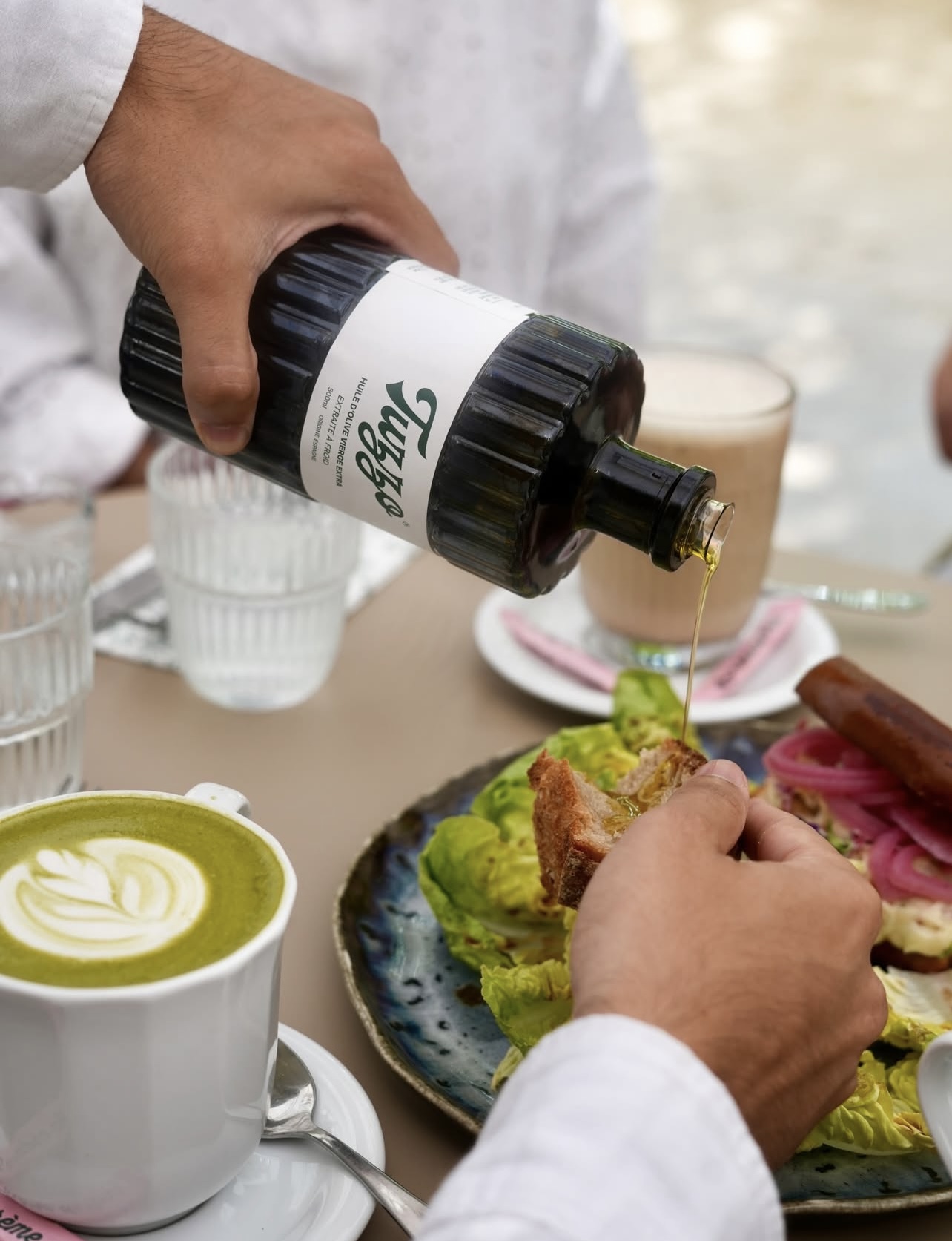
    • On bread, instead of butter: better lipid and glycemic profile.
    • As a finishing oil on pasta, rice, legumes: lowers the meal's glycemic index.
    • For moderate cooking: olive oil is stable up to around 200 °C (see our cooking temperature guide).

    What it does not replace

    Olive oil is not a substitute for antidiabetic medication or medical follow-up. It is a powerful dietary lever, to be integrated into a broader approach: physical activity, vegetables, legumes, whole grains, and reduced fast sugars.

    The takeaways

    • Documented reduction in type 2 diabetes risk (PREDIMED).
    • Better insulin sensitivity and improved HbA1c.
    • Effective dose: 2 to 4 tablespoons/day, replacing other fats.
    • Choose an early-harvest extra virgin, rich in polyphenols.
    • Store it away from light and heat to preserve antioxidants.

    Pour sublimer vos assiettes, nous utilisons notre huile d'olive Coratina des Pouilles, pressée à froid et biologique.

    Newsletter

    L'huile d'olive, la science, et rien d'autre.

    Une fois par mois : un article sourcé sur huile d'olive et santé, nos notes de récolte, et des offres réservées aux abonnés.

    Pas de spam. Désinscription en un clic.

    TUZZO

    L'huile d'olive derrière la science.

    Mono-variétale, pressée à froid quelques heures après la récolte, naturellement riche en polyphénols. Exactement les qualités que les études mesurent.

    Découvrir Tuzzo

    Explorer Tuzzo

    Pour aller plus loin

    Partager l'article