
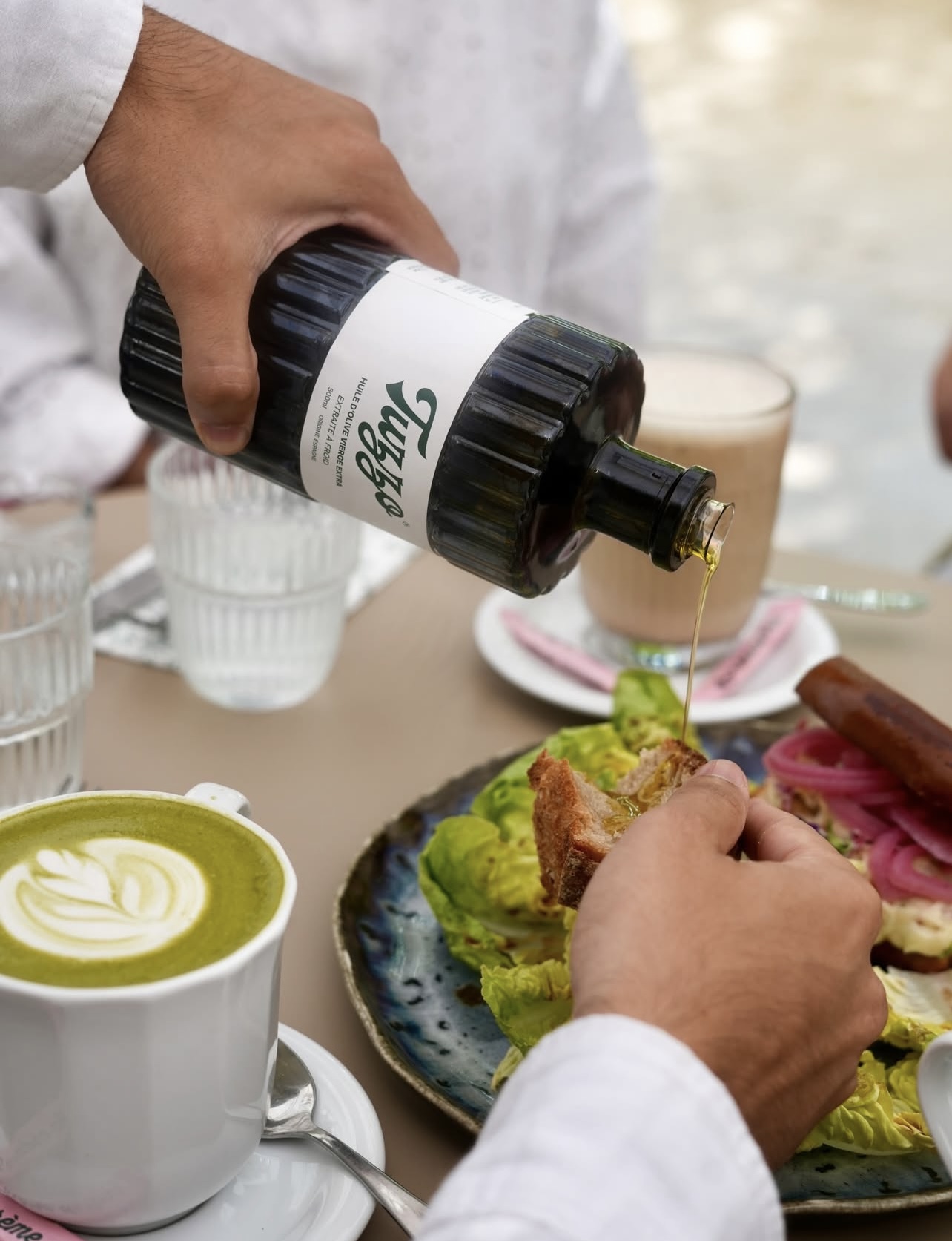
Olive Oil in Coffee: The Oleato Trend Explained
When Starbucks launched its Oleato line in Milan in February 2023, the coffee world reacted as if to a provocation. Howard Schultz himself claimed to have had a revelation in Sicily over a coffee with olive oil. The truth is less glamorous: in Palermo, Naples or Bari, a spoonful of extra virgin olive oil has been added to coffee for at least 200 years, especially in the morning and after a long meal.
Marketing fad or serious health ritual? Here's what to know before you try.
Where does the idea come from?
Southern Italy, Greece and parts of the Middle East have long combined coffee + olive oil as:
- Morning digestive primer — a spoon of olive oil on an empty stomach "lubricates" transit (recognized mild laxative effect)
- Sustained energy — oil slows caffeine absorption, avoiding the spike-crash
- Anti-inflammatory gesture — combination of oleocanthal and coffee polyphenols (chlorogenic acid)
Starbucks repackaged this tradition with its Oleato line (coffee + Sicilian Partanna oil) and globalized the idea. Today, olive oil in coffee belongs to wellness routines alongside bulletproof coffee.
The recipe: 3 versions
1. The traditional Italian (simplest)
- 1 strong espresso (30 ml)
- 1 teaspoon extra virgin olive oil (5 ml), mild to medium fruity
Pour the oil directly into the hot espresso, stir briefly, drink. The oil forms a small golden layer at the surface — that's what softens the bitterness.
2. The Starbucks-style Oleato latte
- 1 double espresso (60 ml)
- 200 ml whole or oat milk, steamed
- 1 tablespoon extra virgin olive oil (15 ml)
- Optional: 1 tsp vanilla syrup or honey
Pour espresso, add oil, blend with frother or whisk, top with hot milk. Velvety, slightly sweet, no bitterness.
3. The Mediterranean "rocket fuel" (on an empty stomach)
- 1 espresso (30 ml)
- 1 tsp extra virgin olive oil
- 1 pinch sea salt
- 1 pinch cinnamon
Drink upon waking. Salt and cinnamon balance bitterness, oil extends energy over 3-4 hours without blood-sugar spike.
Real benefits (and exaggerations)
Documented ✓
- Improved transit: a spoon of olive oil on an empty stomach is a recognized mild laxative
- Anti-inflammatory effect: oleocanthal (oil) + chlorogenic acid (coffee) act synergistically on chronic inflammation
- Stable energy: lipids slow caffeine absorption, avoiding the rollercoaster
- Beneficial oleic acid for lipid profile: improved HDL and lower LDL with regular consumption (see olive oil and cholesterol)
Exaggerated ✗
- "Miracle fat-burner": oil contains 120 kcal per tablespoon (see calories). No study shows significant weight loss from the gesture.
- "Detox": no physiological "detox" mechanism exists; liver and kidneys do the work alone.
- "Metabolic booster": caffeine's thermogenic effect is mild, not amplified by oil.
Possible side effects
Olive oil is very well tolerated, but:
- Strong laxative effect in some people — start with 1 tsp, no more, especially at the beginning
- Digestive discomfort possible if combined with acidic coffee on an empty stomach
- Calories to count: 1 tbsp = ~120 kcal; factor into daily intake
- Not before exercise: lipids slow digestion, impractical pre-workout