Oleic acid, polyphenols, inflammation: how extra virgin olive oil acts on insulin resistance, metabolic syndrome and HOMA-IR. With the real research behind it.
Insulin resistance often shows up years before type 2 diabetes. It is also at the heart of metabolic syndrome, which now affects nearly one in three adults in Western countries. Extra virgin olive oil consistently appears as a first-line dietary tool. Here is why, with sources.
Insulin resistance: what we're talking about
Insulin is the hormone that lets your cells use glucose. When cells become less sensitive to its signal, the pancreas produces more to compensate. Over time, this overload drives type 2 diabetes, fatty liver, hypertension and abdominal weight gain. The most commonly used clinical marker is HOMA-IR.
Why olive oil acts on insulin resistance
Three mechanisms are now documented in the scientific literature.
1. Oleic acid changes the composition of cell membranes
Extra virgin olive oil contains more than 70% oleic acid. When it replaces saturated fatty acids in the membranes of muscle and liver cells, it improves membrane fluidity and insulin receptor signaling. Several clinical trials have shown improved HOMA-IR on an olive-oil-rich diet.
2. Polyphenols reduce chronic inflammation
Low-grade inflammation is a key driver of insulin resistance. Extra virgin olive oil polyphenols — oleocanthal, oleacein, hydroxytyrosol — lower inflammatory markers (CRP, IL-6, TNF-α) in several controlled studies. The EFSA officially recognizes their role in protecting against oxidative stress (20 g/day of polyphenol-rich oil).
3. Gut microbiota effect
Recent work (University of Naples, University of Córdoba) shows that an olive-oil-rich diet promotes a more diverse, less inflammatory gut microbiota, which translates into better insulin sensitivity.
The clinical evidence
- PREDIMED (NEJM, 2013): Mediterranean diet enriched with extra virgin olive oil → −40% type 2 diabetes risk over nearly 5 years.
- Schwingshackl et al. meta-analysis (Lipids in Health and Disease, 2014): significant improvement in fasting glucose and HOMA-IR on an olive-oil-rich diet.
- CORDIOPREV trial (The Lancet, 2022): 1,002 coronary patients, 7 years of follow-up. The extra-virgin-olive-oil-rich Mediterranean diet slowed progression to type 2 diabetes in pre-diabetic patients.
Extra virgin or refined?
The anti-inflammatory effect depends largely on polyphenols, which are completely absent from refined oil. To get the full mechanism, you need a fresh-harvest extra virgin. See extra virgin vs virgin vs refined: the real differences.
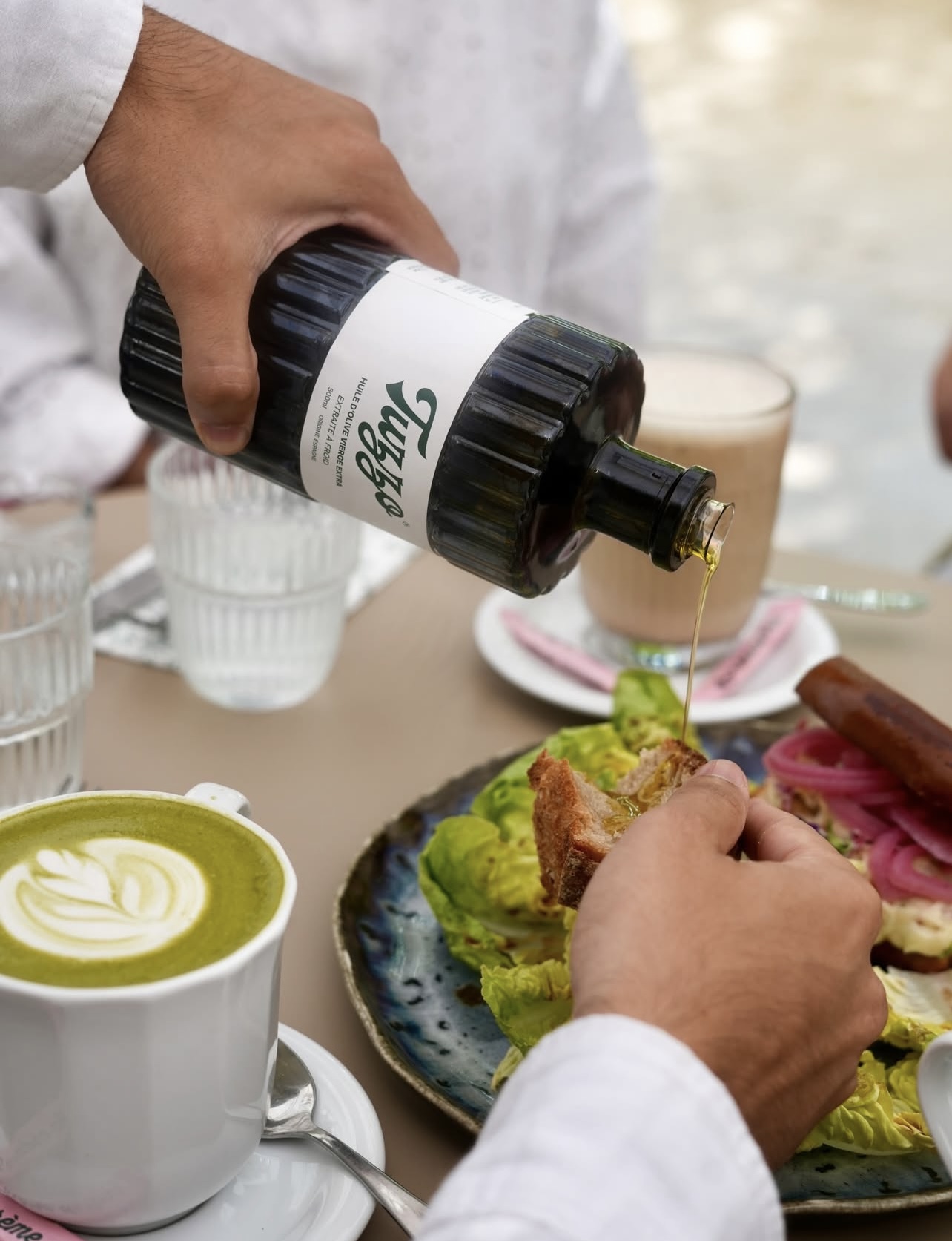
That is exactly the profile of TUZZO olive oil: single-variety, cold-pressed, early-harvest, high polyphenol content — exactly the oil studied in PREDIMED and CORDIOPREV.
Dose and how to use it
- 2 to 4 tablespoons per day (20 to 40 ml), replacing other fats.
- Part raw (dressing, finishing) to preserve polyphenols.
- Part in moderate cooking: extra virgin olive oil is stable up to ~200 °C — see our cooking temperature guide.
- Store away from light and heat (full guide) to preserve antioxidants.
What olive oil does not do
It does not replace physical activity, reducing fast sugars, or medical treatment. But within a Mediterranean diet, it is one of the very few foods whose effect on insulin sensitivity is demonstrated by solid clinical trials.
FAQ — Olive Oil and Insulin Resistance
How much olive oil should I take to improve insulin sensitivity?
Clinical trials (PREDIMED, CORDIOPREV) use a dose of 20 to 40 ml per day, i.e. 2 to 4 tablespoons, replacing other fats. The EFSA validates a protective effect from 20 g/day of polyphenol-rich oil. Our TUZZO oil is dosed exactly in this range for daily consumption.
Can olive oil replace diabetes medication?
No. Olive oil is a dietary tool, not a drug. It improves insulin sensitivity but does not replace metformin, insulin therapy, or medical follow-up. It fits into an overall Mediterranean diet and regular physical activity.
What is the difference between extra virgin and refined olive oil for insulin resistance?
Extra virgin contains the polyphenols (oleocanthal, hydroxytyrosol) responsible for the anti-inflammatory effect. Refined oil loses them during deodorization. For insulin resistance, choose a fresh-harvest extra virgin with high polyphenol content — that is the profile of our TUZZO oil.
How long before HOMA-IR improves?
Randomized controlled trials show improved HOMA-IR and fasting glucose in 8 to 12 weeks on an extra-virgin-olive-oil-enriched diet, compared with a low-fat or saturated-fat-rich diet.
Does olive oil help reduce visceral fat?
Indirectly, yes. By improving insulin sensitivity, it reduces the tendency to store fat viscerally. The PREDIMED study showed reduced waist circumference in the extra-virgin-olive-oil group compared with the control group.
Takeaways
- Oleic acid + polyphenols act together on insulin sensitivity.
- Documented anti-inflammatory effect (CRP, IL-6, TNF-α).
- Demonstrated reduction in type 2 diabetes risk (PREDIMED, CORDIOPREV).
- Effective dose: 20 to 40 ml per day, replacing other fats.
- Prefer a fresh-harvest extra virgin, rich in polyphenols.
Pour sublimer vos assiettes, nous utilisons notre huile d'olive Coratina des Pouilles, pressée à froid et biologique.