
Spaghetti aglio e olio is the purest Italian pasta recipe ever made. No tomato, no cheese, no meat. Garlic, olive oil, chili, parsley. And yet, 90% of versions served outside Italy miss the mark. The difference comes down to two technical details nobody explains. Here is the full method.
The story in one line
Born in 19th-century Naples, it was the dish of modest families: what you cook when the pantry is nearly empty. Today, it is the signature of chefs like Massimo Bottura or Stanley Tucci. The ultimate dish of Italian minimalism.
The 4 ingredients (serves 2)
- 200 g spaghetti (bronze-die, ideally)
- 4 garlic cloves (fresh, firm)
- 60 ml fruity extra virgin olive oil
- 1 tsp peperoncino or chili flakes
- 1 small bunch flat-leaf parsley
- Coarse salt for the water, flaky salt to serve
That is it. No parmesan (purists will kill you). No butter. No lemon.
The method (10 minutes flat)
- Bring 2 liters of water to a boil. Salt generously (10 g/L). Drop the pasta.
- Meanwhile, slice the garlic thinly (not crushed, not in chunks).
- In a large cold pan, add the olive oil and garlic. Turn the heat to very low.
- Let the garlic turn pale gold for 4–5 minutes, never brown. Add the chili in the last 30 seconds.
- When the pasta is al dente (2 minutes before the package time), scoop out a ladle of cooking water, then transfer the spaghetti into the pan.
- Add 4 tablespoons of pasta water. Toss the pan vigorously over medium heat for 1 minute. Oil and starch from the water emulsify: this is what makes the "sauce".
- Off the heat, add chopped parsley. Serve immediately, flaky salt on top.
The 2 details that make 90% of the result
1. Garlic in cold oil. Starting in a hot pan burns garlic in 20 seconds and turns it bitter. Cold start = clean, gentle infusion.
2. The emulsion. A great aglio e olio is not greasy. It is creamy. That creaminess comes only from pasta water binding with oil under agitation. Pure physics: this is what separates amateur and trattoria versions.
Why the oil choice is decisive
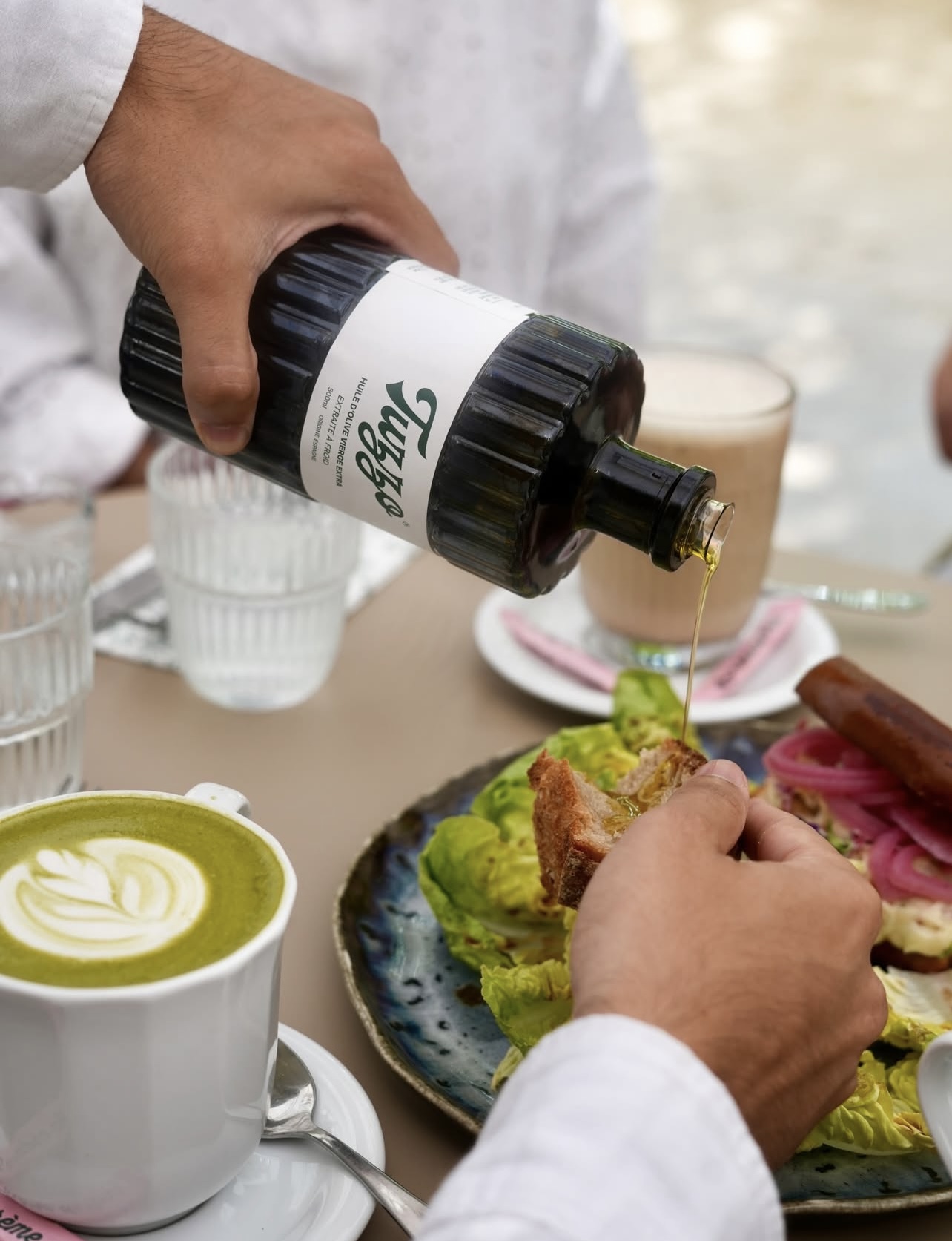
On 200 g of pasta, you have 60 ml of oil and three other ingredients. Oil accounts for 70% of the final aroma. A flat or old oil gives a flat dish. A cold-pressed extra virgin olive oil, fruity, gently peppery, transforms the plate. Simple dishes like this are exactly what we make TUZZO olive oil for. For the grade differences, see virgin, extra virgin, refined.